Apple iPhone Duo launched as Apple’s first foldable smartphone

Apple introduced the iPhone Duo on 9 September, marking the company’s first-ever foldable iPhone. This device arrived with a book-style dual-display design, a titanium build, the same A20 Pro chip found in the iPhone 18 Pro lineup, and an all-day dual-battery setup. Pre-orders begin on 16 October, with availability starting 23 October.
Display and Design
The iPhone Duo features a compact 5.4-inch outer display that makes it easier to use with one hand and carry in a pocket. When unfolded, it reveals a larger 7.6-inch inner display, offering significantly more screen space for multitasking, entertainment, and other tasks.

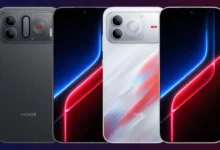

Both displays use the same aspect ratio, allowing content to transition smoothly between the outer and inner screens. They also support ProMotion, Always-On functionality, and up to 3,000 nits of peak outdoor brightness.

Apple has also applied a nano-texture coating to the inner display to reduce glare and make the fold crease less noticeable.
The iPhone Duo will be available in Star White and Night Sky finishes. It features a Grade 5 titanium body with a mirror-polished shell and a 3D-printed hinge cover. The hinge itself includes more than 100 components and uses an internal magnet system to keep the phone securely closed.

Unlike other recent flagship iPhones, the Duo does not feature Face ID. Instead, it comes with a Touch ID fingerprint sensor integrated into the side button. Users can also unlock the phone using an Apple Watch.
Durability
Apple has focused heavily on durability with the iPhone Duo. The device features Ceramic Shield protection on the rear, while the outer display uses the upgraded Ceramic Shield 2, which is claimed to offer three times better scratch resistance than the previous generation.

The phone also comes with an IP68 rating for dust and water resistance. Internally, Apple uses support ribs and ceramic fiber antenna inserts to reinforce the frame, while the folding display features a high-strength glass structure designed to better handle stress during repeated folding.
Performance and OS
The iPhone Duo is powered by the same A20 Pro chip used in the iPhone 18 Pro series. Built on a 2nm process, the chipset features a 6-core CPU that is claimed to be up to 20% faster than the A19 Pro, along with a 7-core GPU offering up to 40% better performance and improved power efficiency.

It also features a new Dual 16-core Neural Engine, which delivers twice the on-device AI processing power compared to the previous generation.
Apple has paired the A20 Pro with a custom vapor chamber and a redesigned chip packaging layout to improve sustained performance. The company claims the iPhone Duo can deliver up to 35% better sustained performance than the iPhone 17 Pro. A new display engine also allows both screens to operate simultaneously while ensuring a smooth transition between folded and unfolded modes.
On the software side, the iPhone Duo ships with iOS 27.1, which includes several optimizations for its foldable design. Apple has redesigned navigation elements to better use the larger inner display and introduced proper Split View multitasking on an iPhone for the first time.

Users can run two apps side by side or open two windows from the same app. StandBy mode also gets additional customization options and can work on both the outer and inner displays without requiring the phone to be connected to a charger.
The device also supports Siri AI, Apple’s upgraded assistant powered by Apple Intelligence. The new Siri uses personal context and on-screen awareness to answer questions and perform actions across apps.
Camera
The iPhone Duo features a 48MP Fusion Main camera with an integrated 2x optical-quality Telephoto capability and zero shutter lag. It is joined by a 48MP Fusion Ultra Wide camera shared with the iPhone 18 Pro. For video calls, Apple has placed a hidden FaceTime camera underneath the inner display.

The foldable design also introduces several new camera features. Duo Preview allows subjects to view themselves on the outer display while photos are captured using the higher-resolution rear cameras. Smart Take uses on-device AI to automatically capture photos when everyone is properly positioned, while Kid Cue displays animations to help capture children’s attention during photos.

Duo FaceTime also allows a second person to join a video call using the outer display. The main camera supports 4K video recording at up to 120fps with Dolby Vision, along with post-capture Cinematic effects at up to 60fps and 4K Dolby Vision time-lapse recording.
Battery and Charging
The iPhone Duo features a battery on each side of its hinge, which work together as a single power system through Apple’s silicon and energy management software. Apple rates the device for up to 31 hours of video playback using the inner display and up to 44 hours using the outer screen. It can also offer up to 24 hours of mixed use across both displays.
The phone supports 50% wired charging in around 20 minutes, while MagSafe and Qi2 wireless charging can reach 50% in approximately 30 minutes. The iPhone Duo is also eSIM-only worldwide, which helps free up internal space for its dual-battery system.
Accessories
Apple is launching two dedicated accessories for the iPhone Duo. The iPhone Duo Folio will be available in Navy Blue and Taupe and includes a built-in kickstand for watching videos or making video calls.

The iPhone Duo Case, meanwhile, will be offered in Sand and Navy Blue. It features a slim two-piece design that protects both sides of the folded phone. Both accessories support MagSafe and Qi2 wireless charging.
iPhone Duo Price and Availability
The iPhone Duo starts at $1,999 for the 256GB version. It will also be available in 512GB, 1TB, and 2TB storage options. The iPhone Duo Case will cost $79, while the iPhone Duo Folio with Kickstand will be priced at $129.
Pre-orders will open on October 16 at 5 a.m. PT across more than 70 countries and regions. Both accessories will also be available to order starting October 16. The iPhone Duo will officially go on sale from October 23, followed by availability in another 28 markets on October 30.