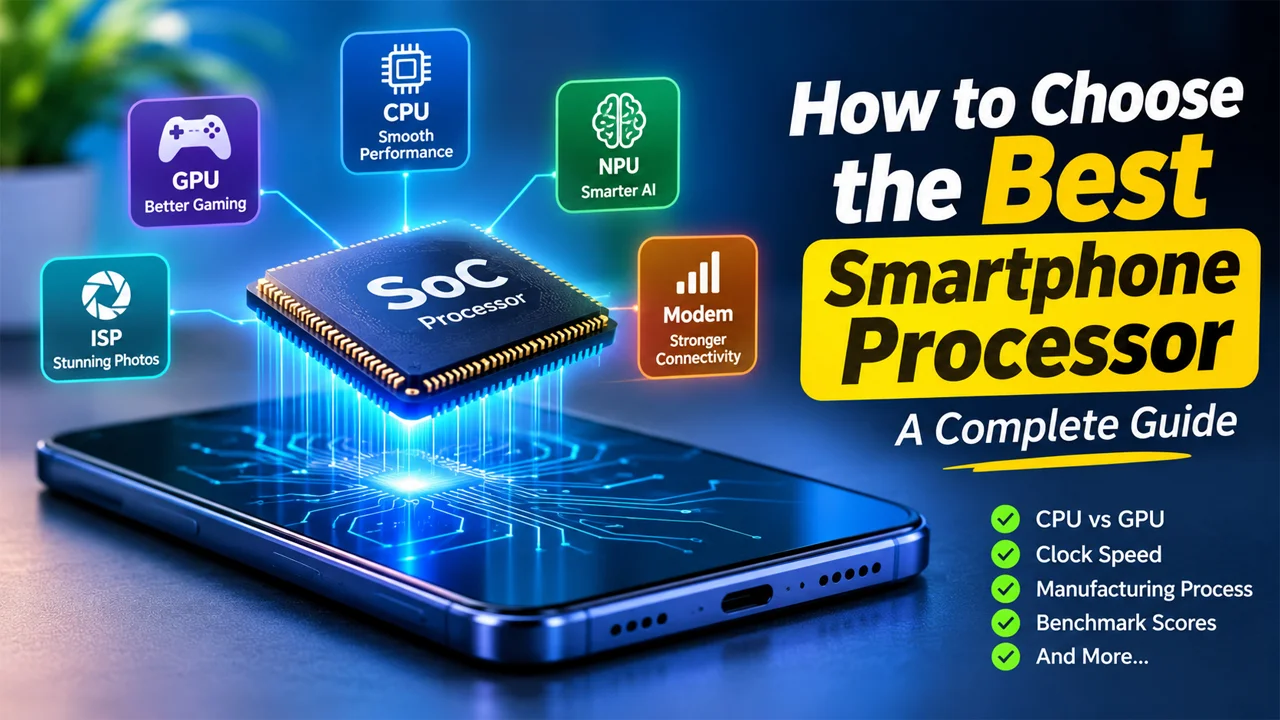
Choosing the best smartphone processor is one of the most important factors when buying a new phone. Whether you want to play demanding games, capture high-quality photos and videos, multitask between applications, or use your smartphone smoothly for years, the right chipset can make a significant difference. However, selecting a processor involves more than comparing Snapdragon, MediaTek, or Exynos chipset names, clock speeds, and benchmark scores. Here’s everything you need to know about how to choose the best smartphone processor according to your budget and requirements.
Common Smartphone Processor Myths

- Snapdragon processors are better than MediaTek, Exynos, or any other Android SoC
- A smaller manufacturing process (nm) always performs better than a larger manufacturing process
- A new-generation processor is always better than older generations
- High Clock Speed means better performance
You may have already heard most of these misconceptions about processors. However, the performance of a processor depends on multiple aspects. A higher GHz number does not necessarily mean better performance, and a newer processor does not always outperform an older flagship chipset. Different processors also have different strengths, including CPU performance, GPU capabilities, AI processing, power efficiency, and image processing.

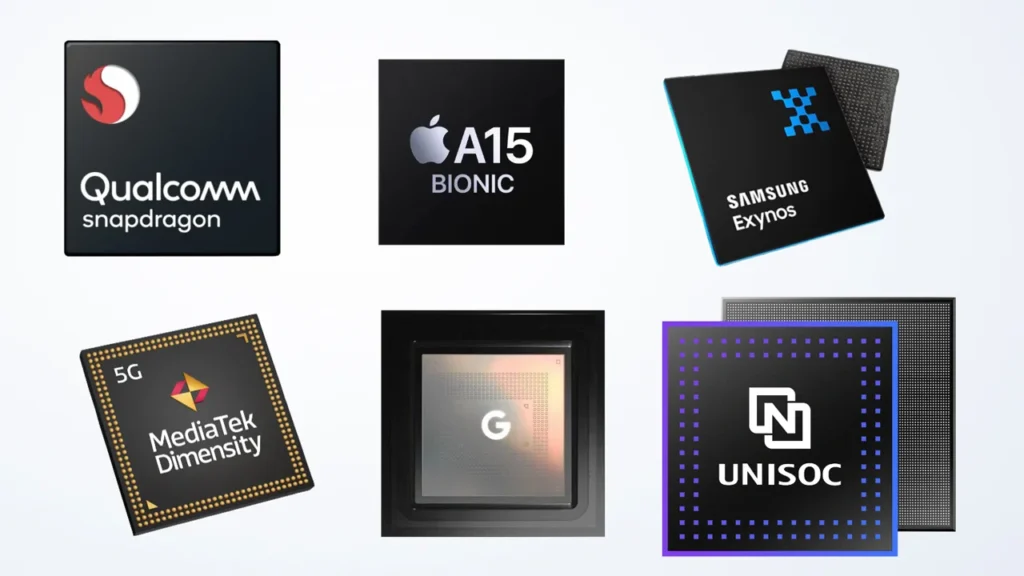
So, before spending your money on a new smartphone, it is important to understand what makes a processor good and which specifications actually matter. We will make you clear about all these misconceptions and will provide a detailed concept about how to select the best processor for your next smartphone. Here is everything you need to consider when selecting the best processor for your next smartphone.
1. Understand Smartphone Processor Components (SoC)
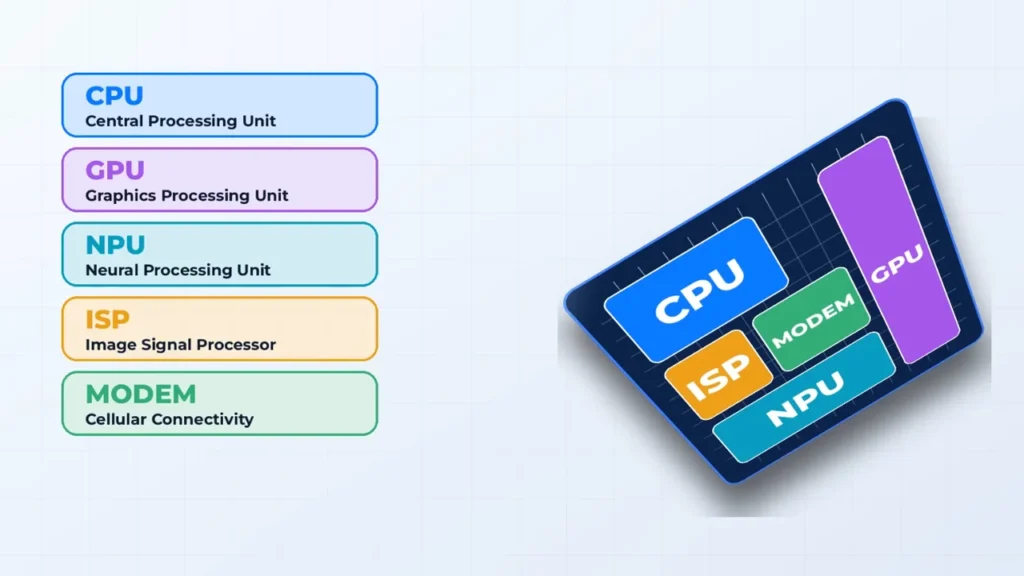
A smartphone processor is usually called a SoC or System-on-a-Chip. The first thing you should know about a processor is its formation and structure. SoC mainly comprises five major segments:
- CPU
- GPU
- NPU
- ISP
- MODEM
All of these components contribute differently to a processor’s performance. However, all these aspects determine a processor’s performance collectively. Let’s break down how these components contribute to a processor’s performance.
Central Processing Unit (CPU)
Central Processing Unit, or CPU, is the key part in a SoC. It is the brain of your smartphone and functions like a human brain, commanding and controlling the smartphone. Generally, it handles most general computing tasks. It manages applications, processes instructions, handles background activities, and controls how quickly your smartphone responds to your commands. A powerful CPU generally helps with faster app launching, smoother multitasking, and better overall responsiveness.
The first thing you should understand when choosing a smartphone processor is the difference between its CPU and GPU. Both are essential parts of a chipset, but they handle different types of workloads.
Graphics Processing Unit (GPU)

The GPU (Graphics Processing Unit), on the other hand, handles graphics-related workloads. It renders images, animations, visual effects, and game environments. If you regularly play demanding games such as Genshin Impact, PUBG Mobile, or Call of Duty: Mobile, the GPU becomes particularly important.
NPU, ISP, and Modem
An NPU is designed to accelerate machine learning and AI operations more efficiently than a traditional CPU or GPU. It can handle tasks such as image recognition, voice processing, background removal, AI noise reduction, and certain generative AI features.

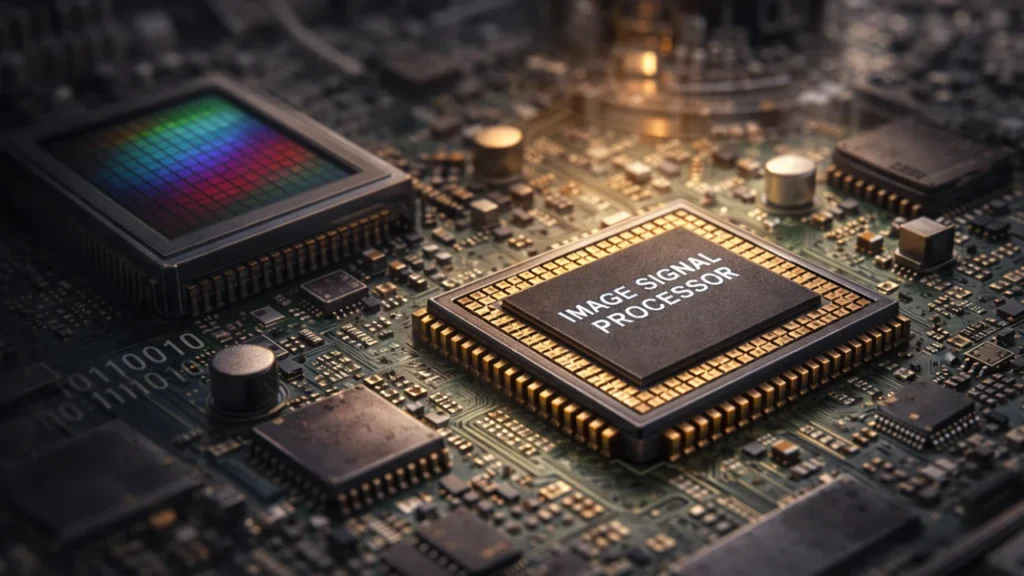
The ISP (Image Signal Processor) processes the data captured by the camera sensor and helps produce the final image or video. It handles several important operations, including noise reduction, HDR processing, autofocus assistance, color reproduction, and computational photography. A powerful ISP can improve image processing speed and help the smartphone capture more detailed photos with better exposure and color accuracy.
A modem basically handles the network and connectivity features of a processor. It is also significant to ensure the performance of an SoC.
So, we’ve got the concept of SoC components and how they contribute to deciding a processor’s performance. Now, let’s discuss what to look for when selecting a good processor.
2. Consider CPU Architecture, Clock Speed, and Manufacturing Process
A smartphone processor’s performance depends on more than its core count or clock speed. Modern chipsets combine performance cores for demanding tasks and efficiency cores for lighter workloads, balancing processing power and battery consumption. However, having more cores or a higher clock speed does not automatically mean better performance.
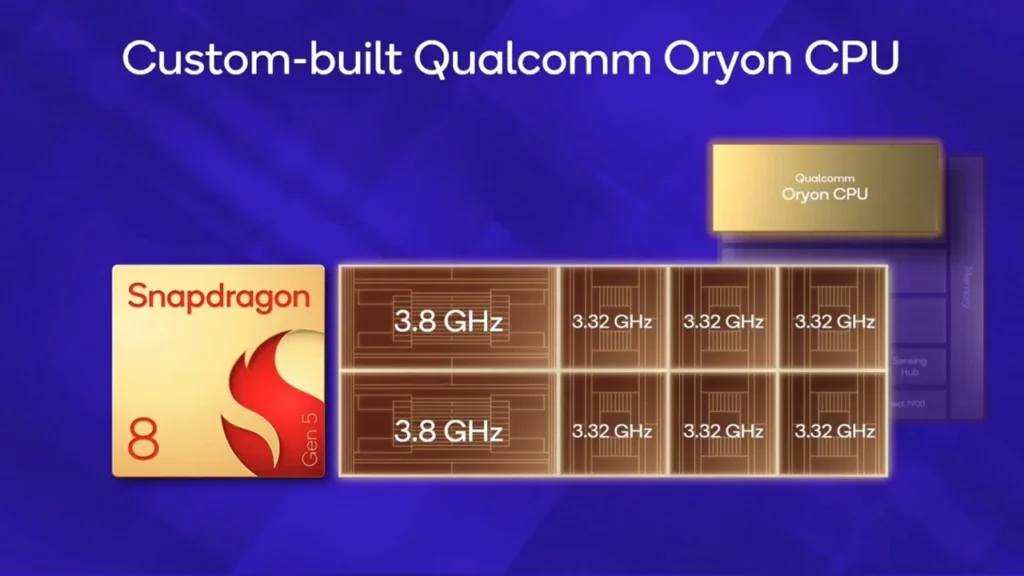
You should also consider the CPU architecture and generation, as newer designs generally deliver better performance and power efficiency. Similarly, advanced manufacturing processes such as 3nm and 4nm can improve transistor density and energy efficiency compared to older nodes. However, the nanometer number alone does not determine a processor’s capabilities.
For example, a newer 3nm processor with a lower clock speed may outperform an older 6nm chipset with a higher frequency. Therefore, compare the CPU architecture, core configuration, clock speed, manufacturing process, and benchmark scores together rather than judging a processor by a single specification.
3. Check the GPU Performance for Better Gaming
If you are a mobile gaming enthusiast, the GPU should be one of your biggest considerations. A powerful GPU helps deliver higher frame rates, better graphics quality, smoother animations, and more stable gaming performance. However, not all smartphone GPUs offer the same capabilities.
Qualcomm’s Adreno GPUs, Arm’s Mali and newer Immortalis GPUs, and Apple’s integrated GPUs use different architectures and performance configurations.
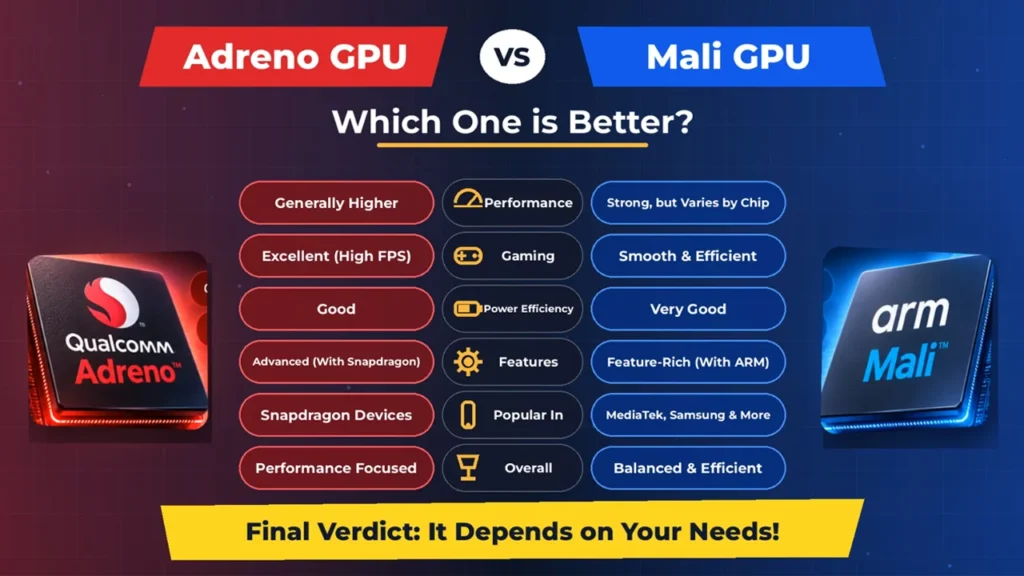
Qualcomm’s Adreno GPU is often considered the best GPU for intense performance or gaming. Meanwhile, the Mali GPUs are renowned for their power efficiency and overall smooth performance, which makes them a value-for-money selection. However, you shouldn’t select the GPU by name; compare the performance in benchmarks and select which fits best within your budget.
You should also remember that a powerful processor does not guarantee that every game will support its highest graphics settings. Game developers, software optimization, and display capabilities also affect the gaming experience.
4. Check RAM and Storage Support
Although RAM and storage are not technically part of the processor, their capacity and technology directly affect overall smartphone performance. Sufficient RAM allows your phone to keep more applications running in the background, making multitasking smoother. However, RAM capacity is not the only factor; you should also check the supported memory standards, such as LPDDR5, LPDDR5X, or LPDDR6, which offer improvements in data transfer speeds and power efficiency.
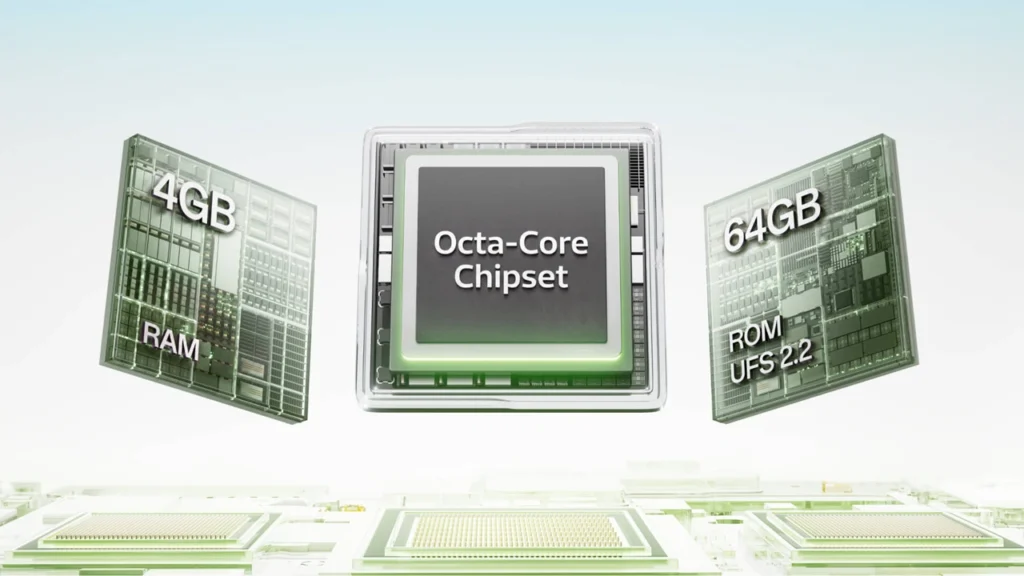
Storage technology matters too. Standards such as UFS 3.1 and UFS 4.0 offer different read and write speeds, affecting app loading, installation, and file transfers. Therefore, consider the processor, RAM, and storage together, as a powerful chipset paired with insufficient RAM or slower storage may not deliver the best overall experience.
5. Compare Smartphone Processor Benchmark Scores
Benchmark scores are among the easiest ways to compare the performance of different smartphone processors. Several popular benchmarking applications measure different aspects of chipset performance.
Here are some of the most useful benchmarking tools:
AnTuTu Benchmark:


AnTuTu measures overall smartphone performance by testing the CPU, GPU, memory, and user experience. It provides a combined score that can help compare devices, although the scoring system and versions can change.
Geekbench:
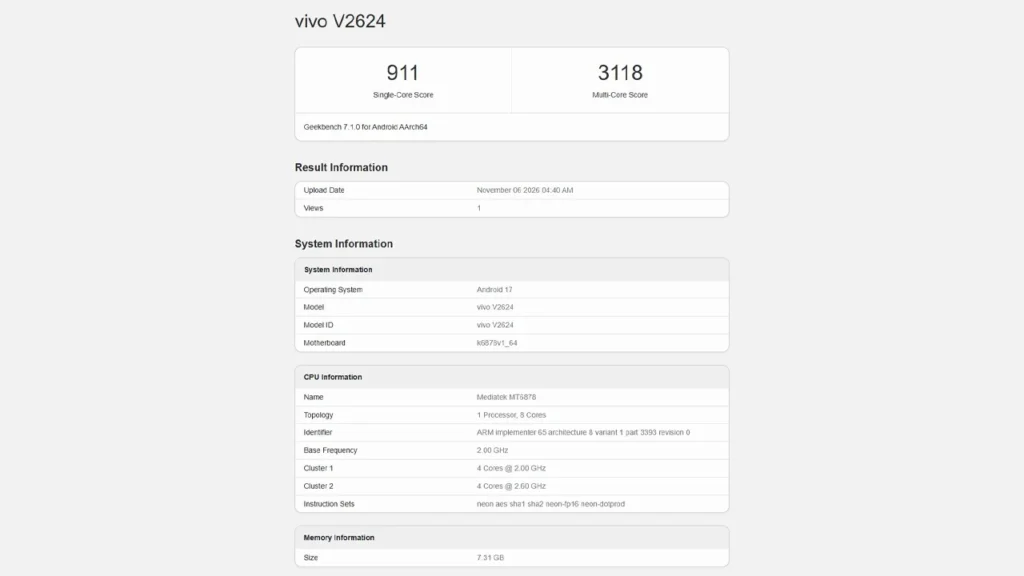
Geekbench measures CPU performance through single-core and multi-core tests. It is particularly useful when comparing the general processing capabilities of different chipsets.
3DMark:
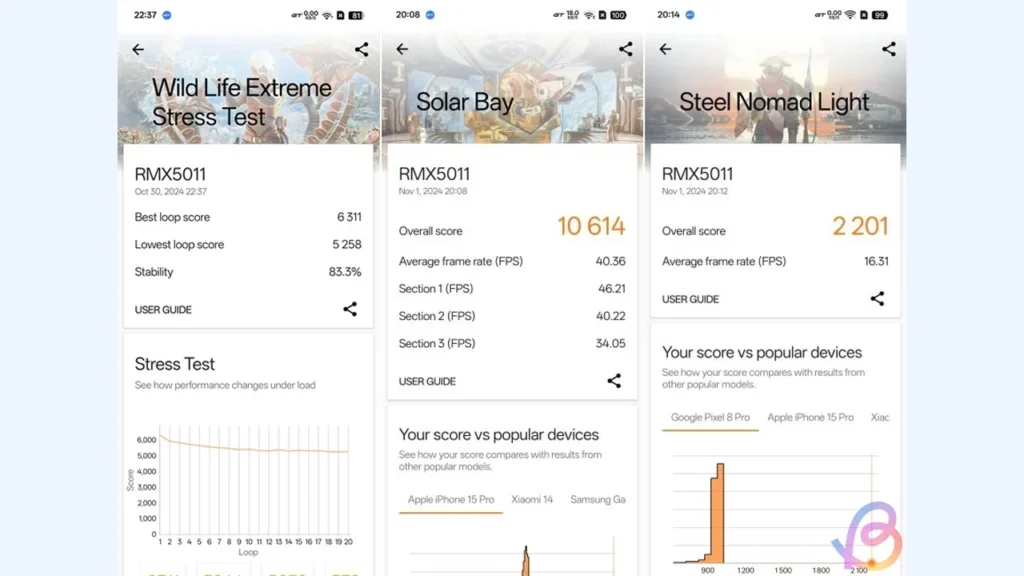
3DMark focuses on GPU and graphics performance. Its stress tests can also help you understand how consistently a smartphone performs during demanding workloads.
PCMark:
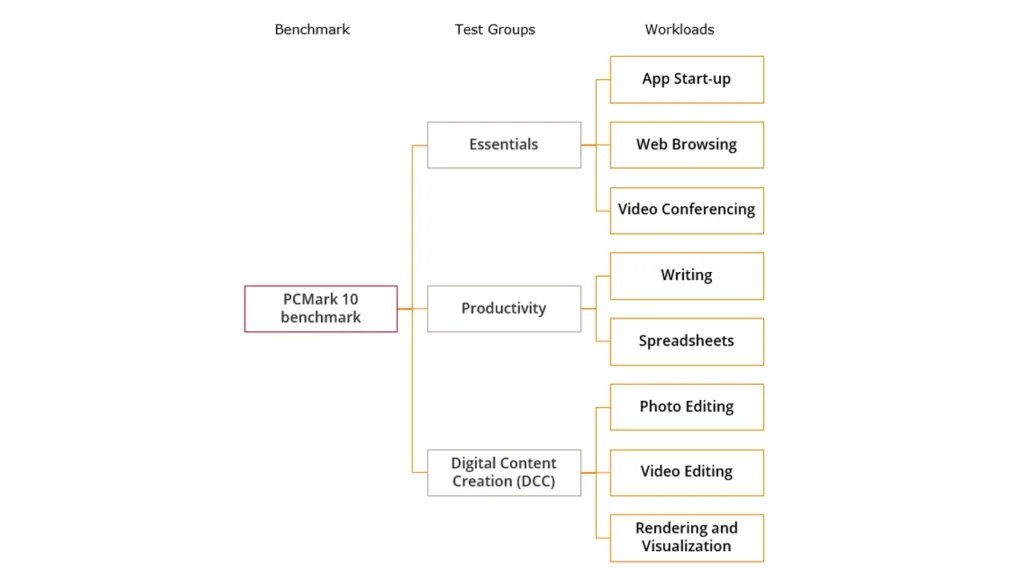
PCMark evaluates everyday smartphone performance through workloads such as web browsing, photo editing, video editing, and document-related tasks.
So, by comparing the benchmark results, we will get the overall performance aspects of a processor. However, benchmark scores should not be your only consideration. Some smartphones perform exceptionally well in short benchmark tests but struggle to maintain that performance during extended gaming sessions. For a more accurate understanding, check both benchmark scores and long-term performance reviews.
You should also compare results from the same benchmark version and similar testing conditions. Software updates, device temperature, performance modes, and RAM configurations can influence the results.
6. Consider Thermal Management, Power Efficiency, and Software Support
A powerful processor needs effective thermal management to maintain consistent performance during demanding tasks such as gaming, video recording, and multitasking. Poor cooling can cause thermal throttling, reducing clock speeds and resulting in frame drops or slower performance. Check the phone’s cooling solutions, such as vapor chambers and graphite sheets, along with long-term gaming reviews and 3DMark stress test results.

Power efficiency is equally important, as it affects battery consumption during everyday use and demanding workloads. Consider the processor’s architecture, manufacturing process, CPU and GPU design, and modem efficiency. Also, check real-world battery test results because display technology, battery capacity, and software optimization influence battery life.
Software support is another important consideration. A capable processor can handle future applications, operating system features, and AI workloads more comfortably. However, software updates and security support depend on the smartphone manufacturer. If you plan to use your phone for three to five years, consider both its processing capabilities and the manufacturer’s update policy.
Which Smartphone Processor Should You Choose?
There is no single processor that is perfect for everyone. The best choice depends on how you use your smartphone and how much you are willing to spend.
Here is a quick recommendation based on different usage requirements.
| Your usage | What to prioritize |
|---|---|
| Everyday use | Balanced CPU and power efficiency |
| Gaming | CPU, GPU performance, cooling, sustained performance |
| Photography | ISP, AI processing, camera compatibility |
| Video editing | Powerful CPU, GPU, RAM and storage |
| AI features | NPU performance and on-device AI support |
| Long-term usage | Efficient architecture and software support |
| Battery life | Power efficiency and thermal management |
If you are a casual user, a good mid-range processor will be more than enough for your daily activities. However, if you play demanding games, edit videos, or regularly use AI-powered applications, investing in an upper-mid-range or flagship chipset can make a noticeable difference.
Final Verdict
Choosing the best processor for your next smartphone requires more than comparing chipset names, clock speeds, or benchmark scores. Consider the CPU, GPU, AI capabilities, manufacturing process, connectivity, thermal management, and power efficiency.
Always evaluate the smartphone as a complete package, including RAM, storage, cooling, and software optimization. Before buying, compare AnTuTu, Geekbench, and 3DMark scores alongside real-world performance, gaming, and battery tests.
Ultimately, the best processor is not necessarily the most powerful or expensive one. It is the one that offers the right balance of performance, efficiency, and long-term reliability for your needs.
FAQ
The best smartphone processor depends on your budget and usage requirements. Flagship Snapdragon, MediaTek Dimensity, and Apple A-series chips offer powerful performance, while mid-range processors are sufficient for everyday tasks.
Not necessarily. Both Snapdragon and MediaTek offer powerful processors across different price segments. Their performance depends on the specific chipset, CPU and GPU architecture, power efficiency, and software optimization.
No. Clock speed alone does not determine processor performance. CPU architecture, core configuration, manufacturing process, and optimization also play important roles.
AnTuTu and Geekbench help compare processor performance through standardized tests. However, you should also consider real-world performance, gaming stability, thermal management, and battery efficiency before making a decision.
A processor with a powerful GPU, efficient CPU, and good thermal performance is ideal for gaming. Flagship Snapdragon and MediaTek Dimensity chipsets generally offer strong gaming capabilities, but sustained performance also depends on the smartphone’s cooling system and software optimization.
-
-

-
-