Xiaomi Redmi Pad 2 Pro

Pro and cons
Pros
- Aluminum frame and back.
- 12.1-inch IPS display, 120Hz refresh
- Snapdragon 7s Gen 4 with 6/8GB RAM.
- Stereo 4 speakers with Dolby Atmos.
- 12000mAh battery with 33W charger.
Cons
- No cellular connectivity.
- FM radio was unavailable.
- NO NFC and FM Radio.
Available variants 5G with WIFI or WIFI
Specifications
General
| Brand | Xiaomi |
| Model | Redmi Pad 2 Pro |
| Device | Tablets |
| Added | September 24, 2025 |
| Updated | February 15, 2026 |
Prices
Official | 8GB 256GB WIFI ৳37,999 / 8GB 256GB SIM ৳44,999 |
Unofficial | 8GB 256GB ৳36,000 |
Launch
Announced | 2025, September 24 |
Status | Available. Released 2025, September 24 |
Network
Technology | GSM / HSPA / LTE / 5G |
2G bands | GSM 850 / 900 / 1800 / 1900 - cellular model only |
3G bands | HSDPA 850 / 900 / 1700(AWS) / 1900 / 2100 - cellular model only |
4G bands | 1, 2, 3, 4, 5, 7, 8, 12, 13, 17, 18, 19, 20, 26, 28, 32, 38, 40, 41, 42, 48, 66, 71 - cellular model only |
5G bands | 1, 2, 3, 5, 7, 8, 12, 20, 26, 28, 38, 40, 41, 48, 66, 77, 78, 71 SA/NSA - cellular model only |
Speed | HSPA, LTE, 5G - cellular model only |
Body
Dimensions | 279.8 x 181.7 x 7.5 mm (11.02 x 7.15 x 0.30 in) |
Weight | 610 g (1.34 lb) |
Build | Glass front (Gorilla Glass 3), aluminum frame, aluminum back |
SIM | Nano-SIM + eSIM - cellular model only Nano-SIM + Nano-SIM + eSIM (max 2 at a time) - cellular model only |
Others | Stylus support (magnetic) IP53 dust protected and water resistant (vertical water sprays) |
Display
Type | IPS LCD, 68B colors, 120Hz, Dolby Vision, 600 nits (HBM) |
Size | 12.1 inches, 424.5 cm2 (~83.5% screen-to-body ratio) |
Resolution | 1600 x 2560 pixels, 16:10 ratio (~249 ppi density) |
Protection | Corning Gorilla Glass 3, Mohs level 6 |
Features | Matte glass (optional) |
Platform
OS | Android 15, HyperOS 2 |
Chipset | Qualcomm SM7635 Snapdragon 7s Gen 4 (4 nm) |
CPU | Octa-core (1x2.7 GHz Cortex-A720 & 3x2.4 GHz Cortex-A720 & 4x1.8 GHz Cortex-A520) |
GPU | Adreno 810 |
Memory
Card slot | microSDXC (dedicated slot) |
Internal | 128/256 GB |
RAM | 6/8 GB |
Variant | 6GB 128GB / 8GB 128GB / 8GB 256GB |
Main camera
Dual | 8 MP, f/2.0, (wide), 1/4.0", 1.12µm - Wi-Fi model 13 MP, f/2.2, (wide), 1/3.06", 1.12µm, AF - 5G model |
Features | Color spectrum sensor, LED flash, HDR |
Video | 1080p@30fps |
Selfie camera
Single | 8 MP, f/2.3, (wide), 1/4.0", 1.12µm |
Video | 1080p@30fps |
Sound
Loudspeaker | Yes, with stereo speakers, Dolby Atmos (4 speakers) |
3.5mm jack | No 24-bit/192kHz Hi-Res audio |
Connectivity
WLAN | Wi-Fi 802.11 a/b/g/n/a/6, dual-band, Wi-Fi Direct |
Bluetooth | 5.4, A2DP, LE, aptX HD, aptX Adaptive |
GPS | GPS, GLONASS, GALILEO, BDS (B1I + B1C), QZSS - cellular model only |
NFC | No |
FM radio | No |
USB | USB Type-C 2.0, OTG |
Infrared port |
Features
Sensors | Accelerometer, gyro, proximity (accessories only), compass, gyro (cellular model only) |
Battery
Type | Non-removable Li-Po |
Capacity | 12000 mAh |
Charging | 33W wired, PD3.0, QC3+ 27W reverse wired |
More
Made by | China |
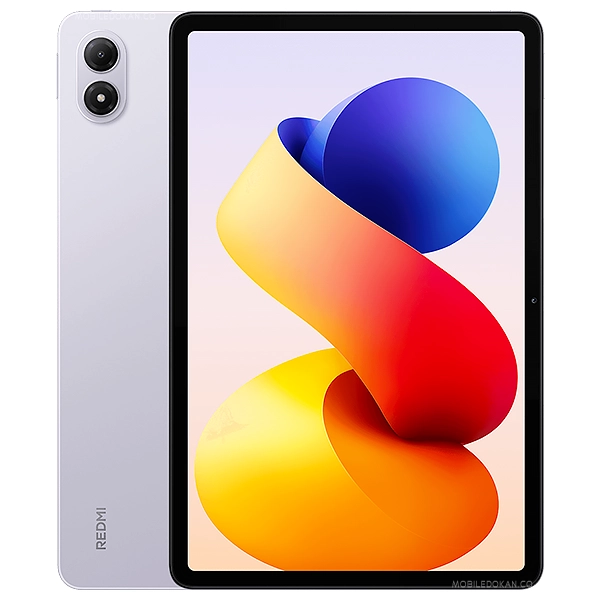
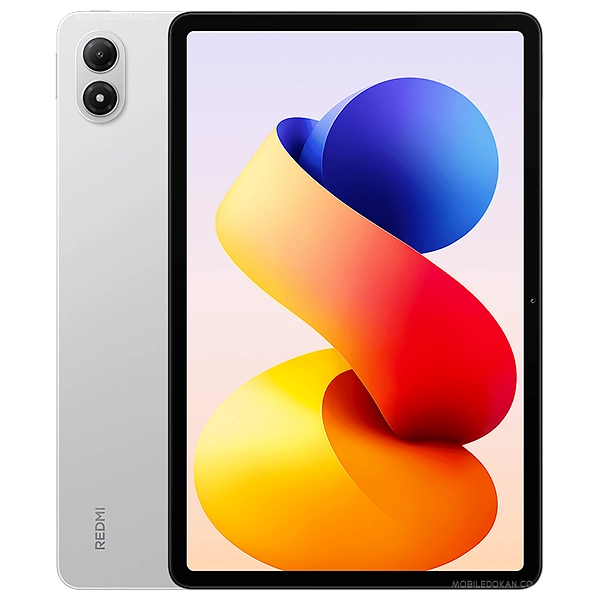
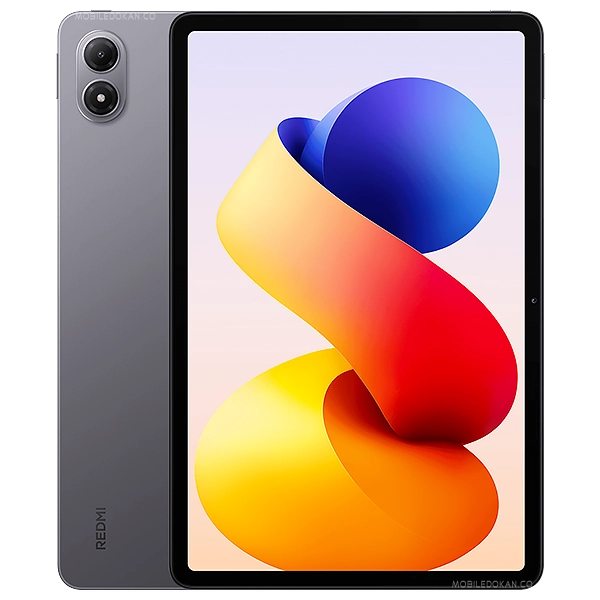
Color | Graphite Gray, Silver, Lavender Purple, Matte Glass Version |
Models | 25099RP13G, 2509BRP2DG |
Disclaimer
We do not guarantee that the information of this page is 100% accurate and up to date. Read more about our full disclaimer
Xiaomi Redmi Pad 2 Pro Price in Bangladesh September 2026
The Xiaomi Redmi Pad 2 Pro is now available in two variants (128/256GB/6/8GB RAM). Now, Xiaomi Redmi Pad 2 Pro’s Price is 37999 Taka in Bangladesh. Redmi Pad 2 Pro has a 12000mAh battery with 33W fast charging. This device is running with Android 15 and is powered by the Qualcomm SM7635 Snapdragon 7s Gen 4 (4 nm) chipset.
| Model | Xiaomi Redmi Pad 2 Pro |
| Price | BDT. 37,999 |
| Display | 12.1″1600×2560 pixels |
| RAM | 6/8 GB |
| ROM | 128/256 GB |
| Released | 2025 September |
Xiaomi Redmi Pad 2 Pro highlights
Xiaomi Redmi Pad 2 Pro will be launched in September 2025. The Redmi Pad 2 Pro was launched with a model number 25099RP13G. Firstly, its dimensional measure is 279.8 x 181.7 x 7.5 mm, and the weight is 610 grams. Secondly, the Redmi Pad 2 Pro display is a 12.1-inch IPS LCD panel with a 1600 x 2560 pixels resolution. The display is protected with Corning Gorilla Glass. Thirdly and most importantly, It is powered by the Qualcomm SM7635 Snapdragon 7s Gen 4 (4 nm) and runs with Android 15. Moreover, it has an Octa-core (1×2.7 GHz Cortex-A720 & 3×2.4 GHz Cortex-A720 & 4×1.8 GHz Cortex-A520) CPU.
The Xiaomi Redmi Pad 2 Pro tablet has a dual-camera setup on the back. This formation consists of an 13MP, 8MP depth camera and a 8MP selfie camera inside the display’s punch hole. The video recording capability is 1080p@30fps. According to its RAM and ROM, it has two (6/8GB/128/256GB) variants. On the other hand, indeed, Redmi Pad 2 Pro has a 12000mAh battery with 33W fast charging.
On the other hand, the device also features WLAN, Bluetooth, FM Radio, a USB port, and Face unlock.
Your question and our opinion about the Pad 2 Pro
Which question will you have about this tab? Let’s justify these. We are including the major questions and answers about this tab. So, let’s start now.
It will launch in September 2025.
The price of the Xiaomi Redmi Pad 2 Pro is BDT. 37,999.
It has two variants of 6/8GB in RAM and 128/256GB in ROM. Overall, the market offers three variants (128GB/6GB, 128GB/8GB, 256GB/8GB).
It has a 12.1″ IPS LCD Display panel with a 1600 x 2560 pixels resolution.
It contains the Qualcomm SM7635 Snapdragon 7s Gen 4 (4 nm) chipset.
The dual-camera setup on the back is 13MP+8MP, and an 8MP selfie camera. The video recording capability is 1080p@30fps.
The battery capacity is a 12000mAh Li-Polymer battery with 33W fast charging.
Accelerometer, gyro, proximity, compass.
Xiaomi manufactured it and this phone is made in China.
Reason to Buy
In this paragraph, we will describe the important reasons for buying this tablet. Why may a person buy this tab? Firstly, when anyone wants to buy a device, they look for premium features according to their price. Let’s explore some key features of the Redmi Pad 2 Pro.
Our Verdict
In conclusion, we are giving our verdict on this device. Suppose you want to buy the best tab under 60K Taka. Then Xiaomi Redmi Pad 2 Pro will be in the first row among the best tablets. Dear friends, if you are interested in online games like Free Fire and PUBG MOBILE, you can purchase them, as this device features 6GB/8GB RAM and a processor powered by the Qualcomm SM7635 Snapdragon 7s Gen 4 (4 nm) chipset. If you want a big backup on charge, you can buy this because it has a massive 12000mAh battery. However, it has a dual-cam setup with an 13MP primary camera. So, the image and video capabilities may be good. Therefore, to judge all of these reasons, you can buy this.